
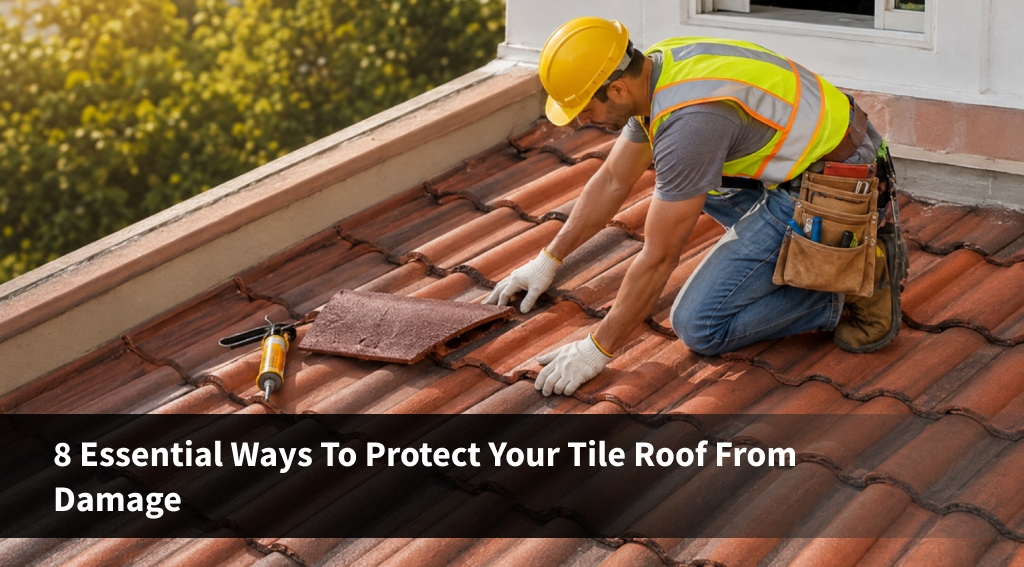
The best way to protect a tile roof is through regular inspections, careful cleaning, prompt repairs, clear gutters, and professional maintenance. Key tiled roof maintenance tips include replacing cracked tiles, controlling moss and algae, trimming nearby trees, and checking flashing and roof valleys. These simple steps can help prevent roof tile leaks, extend roof life, and reduce the risk of expensive repairs.
1. Inspect Your Tile Roof Regularly
Regular roof checks are one of the easiest ways to catch problems early. In particular, look for cracked, broken, loose, or missing tiles, especially after heavy rain, strong winds, or storms.
Also look for damaged flashing, deteriorated pointing, moss growth, and signs of water entering the home.
Why does this matter? Early detection lets you repair minor problems before they affect the underlying roof structure.
2. Keep Your Tile Roof Clean
Regular tile roof cleaning removes leaves, dirt, moss, algae, and other buildup that can hold moisture against the tiles.
However, tile roofs should not automatically be pressure washed. Excessive pressure can damage certain tiles or force water into vulnerable areas.
The safest cleaning method depends on the tile material, roof condition, pitch, and type of buildup. For example, heavy moss growth may require a more controlled professional cleaning approach.
3. Replace Damaged Tiles Promptly
Cracked or broken tiles can allow water to reach the layers underneath the roof. Over time, this may contribute to moisture damage and roof tile leaks.
Replace damaged tiles as soon as possible rather than waiting for visible signs of water damage inside your home.
A replacement tile should also match the existing roof to maintain proper protection and appearance.
4. Keep Gutters and Valleys Clear
Your roof needs a clear path for rainwater to drain away. Unfortunately, leaves, dirt, twigs, and other debris can collect in gutters and valleys, particularly when your property has trees nearby.
As part of your tile roof maintenance, regularly check:
- Gutters and downpipes
- Roof valleys
- Areas around chimneys
- Roof edges
- Drainage points
Good drainage helps move rainwater away from the roof and reduces unnecessary moisture exposure.
5. Trim Nearby Trees
Overhanging branches can damage roof tiles during windy weather. They can also drop leaves onto the roof and into gutters, increasing debris and moisture buildup.
Trim branches that come too close to the roof. In addition, maintaining good airflow and sunlight around the roof can help limit excessive moss and algae growth.
6. Check Flashing, Pointing and Ridge Areas
Tiles are only one part of a roofing system. Flashing, ridge caps, valleys, bedding, and pointing also help keep water out.
During a roof inspection, pay particular attention to areas around:
- Chimneys
- Skylights
- Roof vents
- Ridge lines
- Roof-wall junctions
For example, cracked pointing or damaged flashing can create an entry point for water. Therefore, these areas should be checked whenever the roof is inspected.
7. Avoid Walking Directly on Roof Tiles
It may seem harmless to walk across a tiled roof, but doing so can cause cracks or break tiles, particularly if they are older or already weakened.
For this reason, avoid getting onto the roof unless you have the right experience, equipment, and safety measures.
If roof access is needed for cleaning, repairs, or an inspection, it is generally better to have a roofing professional handle the work. This helps protect both the roof and the person carrying out the maintenance.
8. Schedule Professional Roof Maintenance
A quick look from the ground can help you spot obvious problems, but it cannot always reveal what is happening underneath or between the tiles.
Professional tile roof maintenance by Clearview Roofing Sydney can provide a closer assessment of damaged tiles, drainage, flashing, pointing, ridge areas, and other roofing components.
This is particularly helpful if your roof is older, your property is surrounded by trees, or your home has recently experienced severe weather.
How Can Regular Tile Roof Maintenance Prevent Damage?
Regular maintenance helps prevent damage by identifying weak or damaged areas before they worsen. It can also keep drainage systems working correctly and reduce moisture buildup.
Maintenance Task | Main Benefit |
Roof inspection | Finds early damage |
Tile cleaning | Removes dirt and organic growth |
Tile replacement | Reduces leak risks |
Gutter cleaning | Improves drainage |
Tree trimming | Reduces falling debris |
Flashing checks | Helps prevent water entry |
For example, replacing one cracked tile is generally simpler than dealing with widespread water damage caused by a long-term leak.
What Are the Signs Your Tile Roof Needs Attention?
Common warning signs include cracked or missing tiles, water stains on ceilings, damp areas, mould, blocked gutters, excessive moss, and visible deterioration around roof openings.
If you notice these problems, don’t wait for the damage to spread. A professional assessment can help determine whether the roof needs cleaning, repairs, restoration, or further inspection.
Conclusion
Protecting your tile roof does not have to be complicated. Regular inspections, appropriate tile roof cleaning, clear gutters, tree trimming, timely tile replacement, and professional maintenance can help keep your roof in good condition.
At Clearview Roofing Sydney, we can help homeowners identify roofing problems and determine the right maintenance or repair solution. Taking action early can help protect your roof, reduce the risk of roof tile leaks, and support its long-term performance.
People Also Ask
Q1: How often should a tile roof be inspected?
A tile roof should be visually checked several times a year and after major storms. Professional inspections can be scheduled based on the roof’s age and condition.
Q2: Can cracked tiles cause roof leaks?
Yes. Cracked or broken tiles can allow water to reach the roofing layers underneath, increasing the risk of leaks and moisture damage.
Q3: Is pressure washing safe for tile roofs?
Not always. Excessive pressure can damage some tiles or force water underneath them. The cleaning method should match the tile type and roof condition.
Q4: How do I prevent moss from growing on roof tiles?
Keep the roof and gutters free from excessive debris, trim nearby trees, and address areas where moisture remains trapped. Professional cleaning may be appropriate for established moss.
Q5: When should roof tiles be replaced?
Damaged, cracked, broken, or missing tiles should generally be replaced promptly. A roofing professional can determine whether isolated repairs or broader work is needed.
Q6: How can I prevent roof tile leaks?
Regular inspections, prompt tile repairs, clean drainage systems, and properly maintained flashing and pointing can help reduce the risk of roof tile leaks.
4 Responses